Monday 22 July 2019, Jerusalem
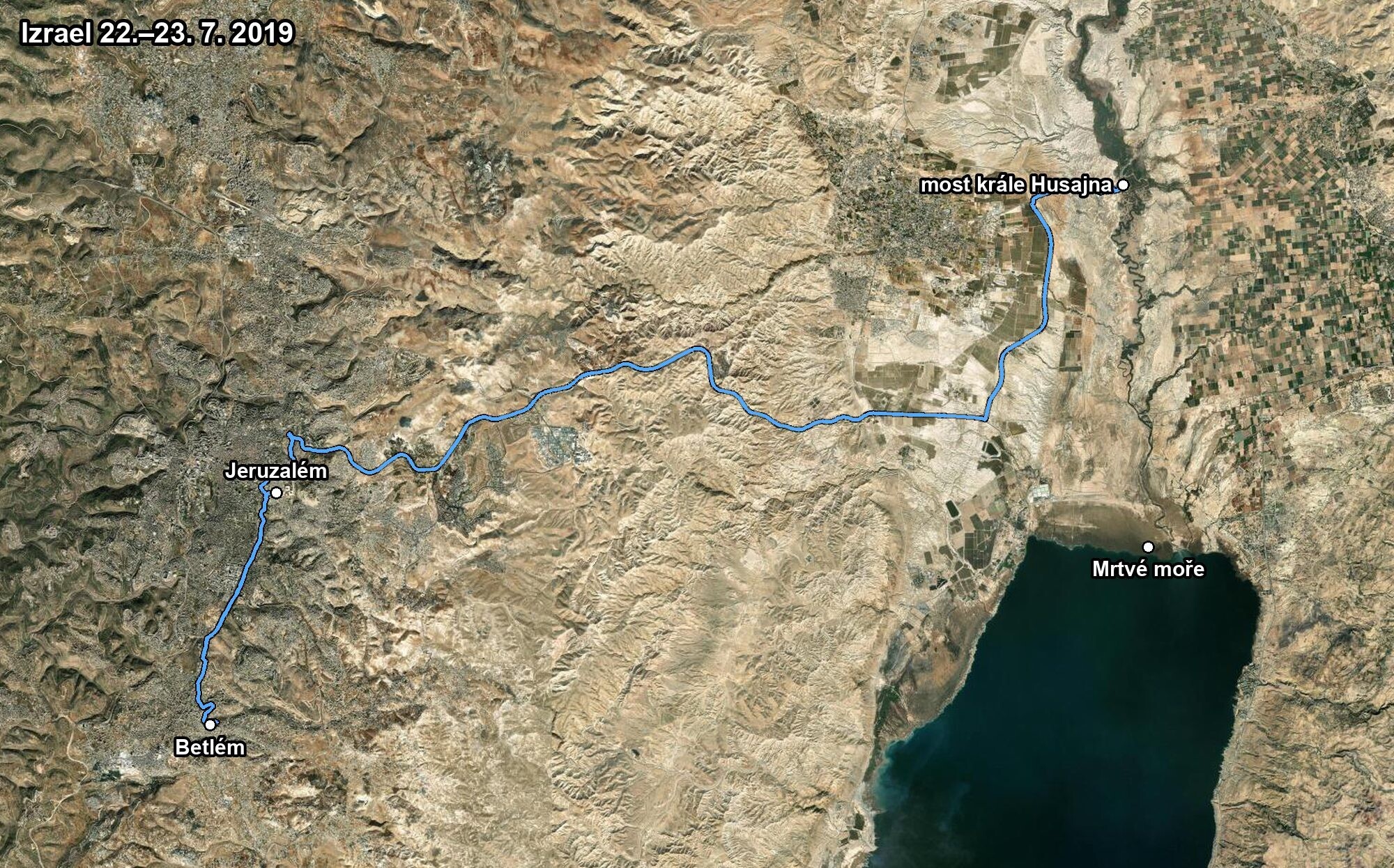
After a sleepless night in the car we were standing at half past eight on the Jordanian side of the King Hussein Bridge. You cross the border by bus, our passports went through seven pairs of hands along the way, and we only got to Jerusalem, which is 40 km from there, around one in the afternoon.
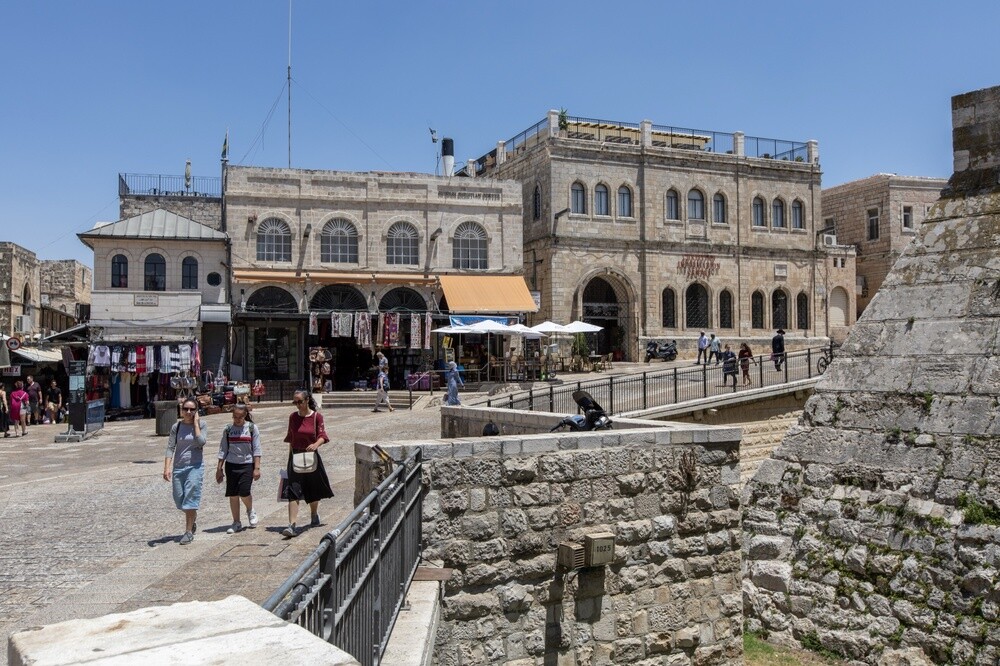
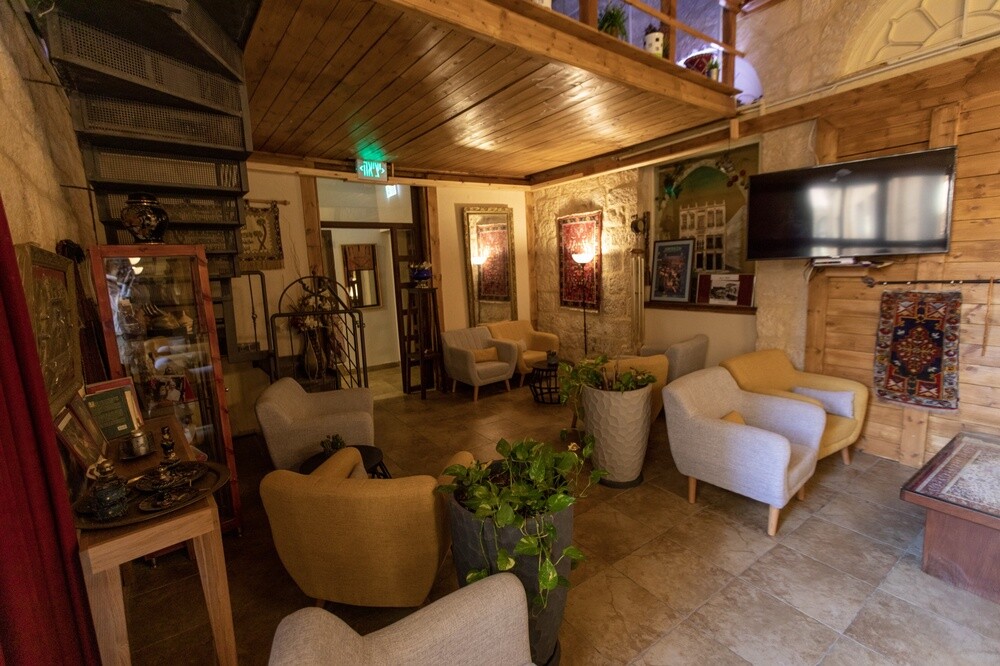
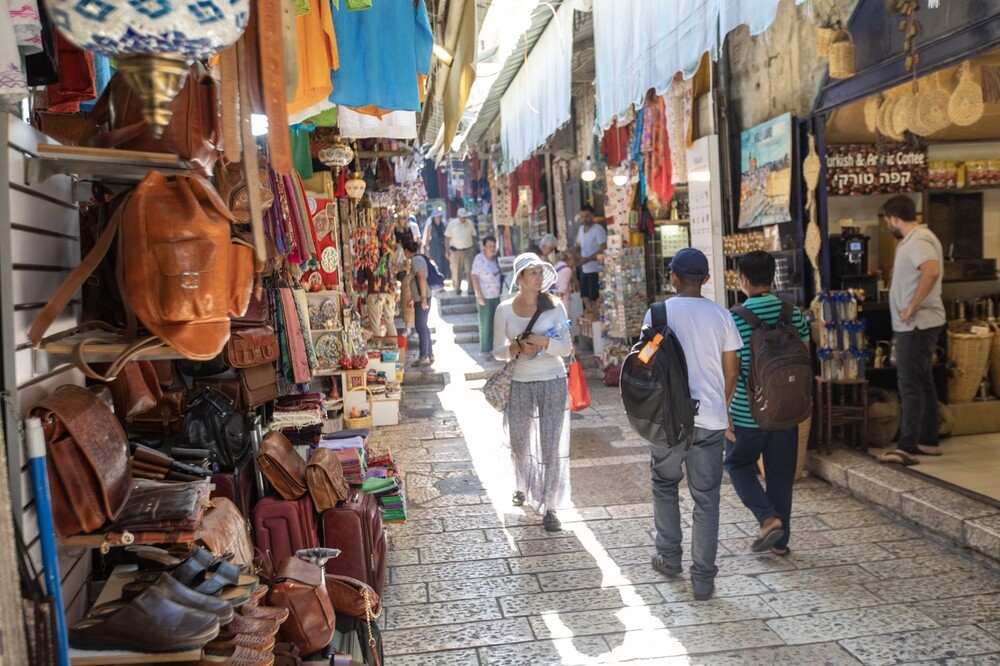
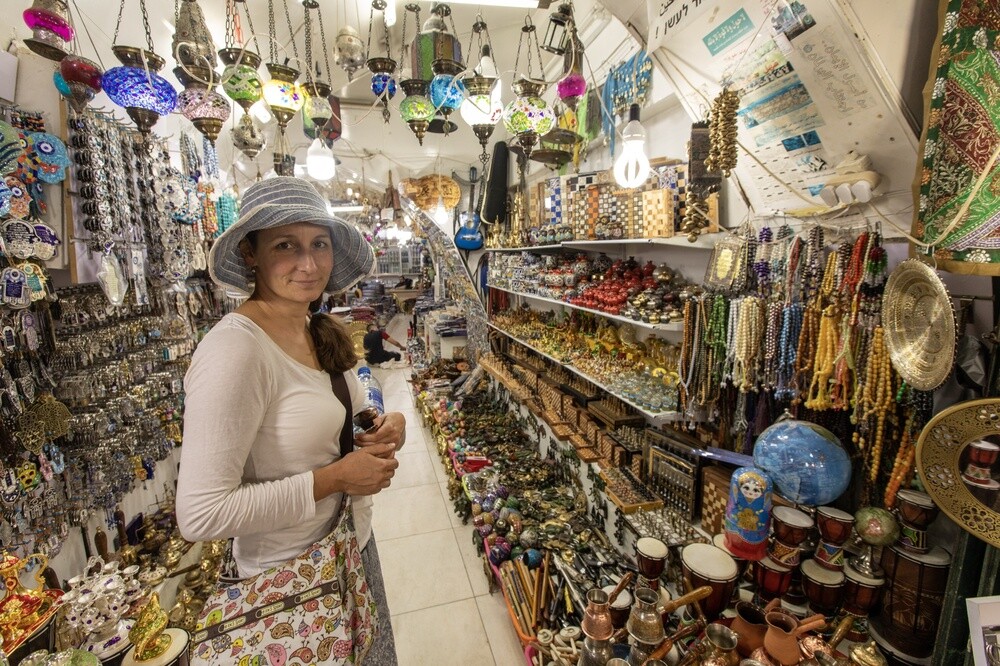
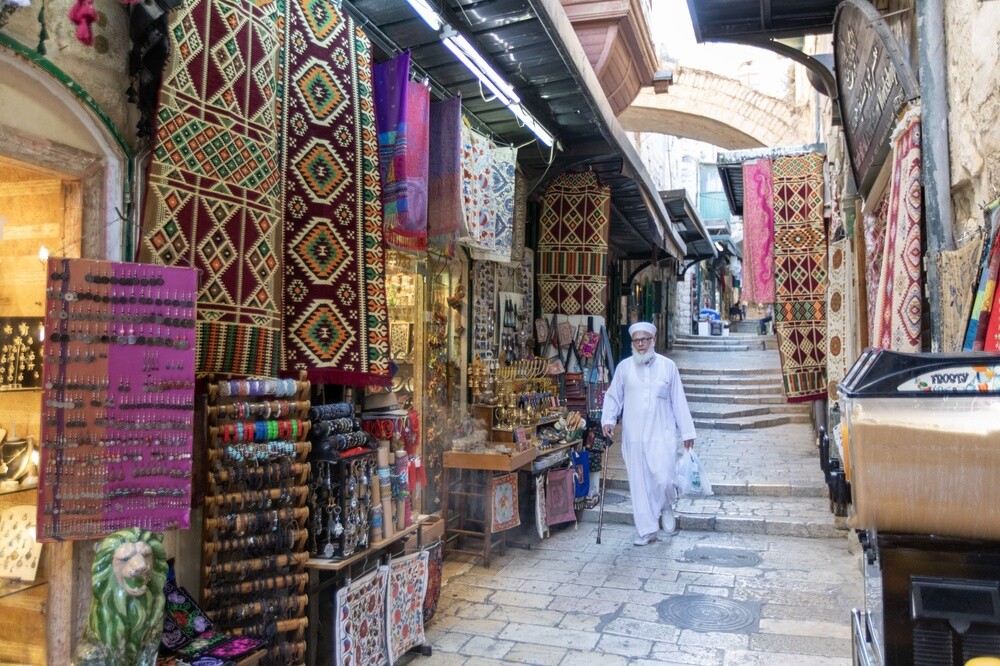
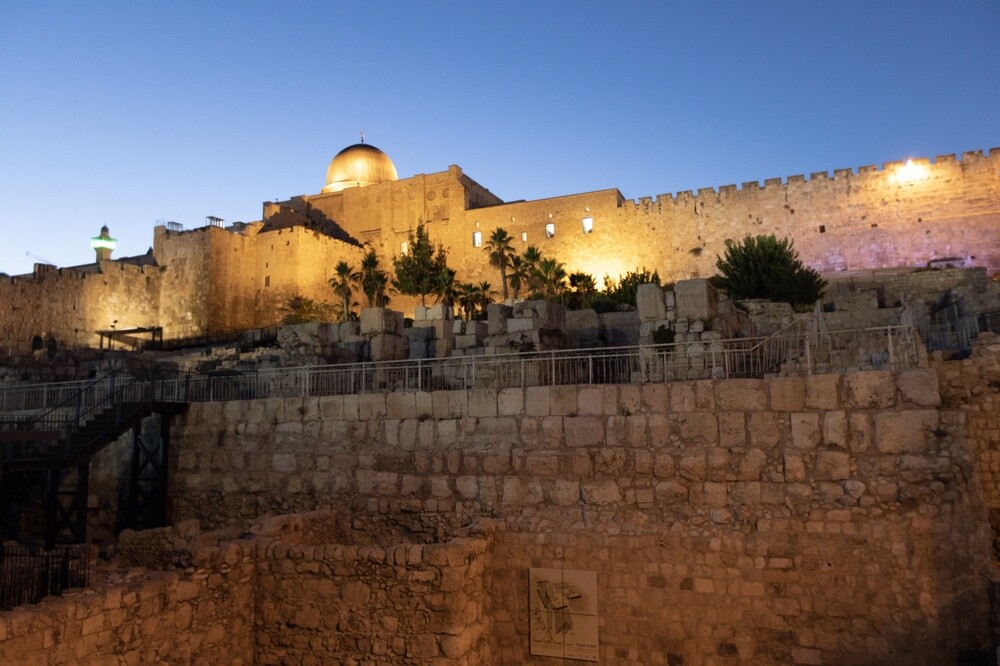
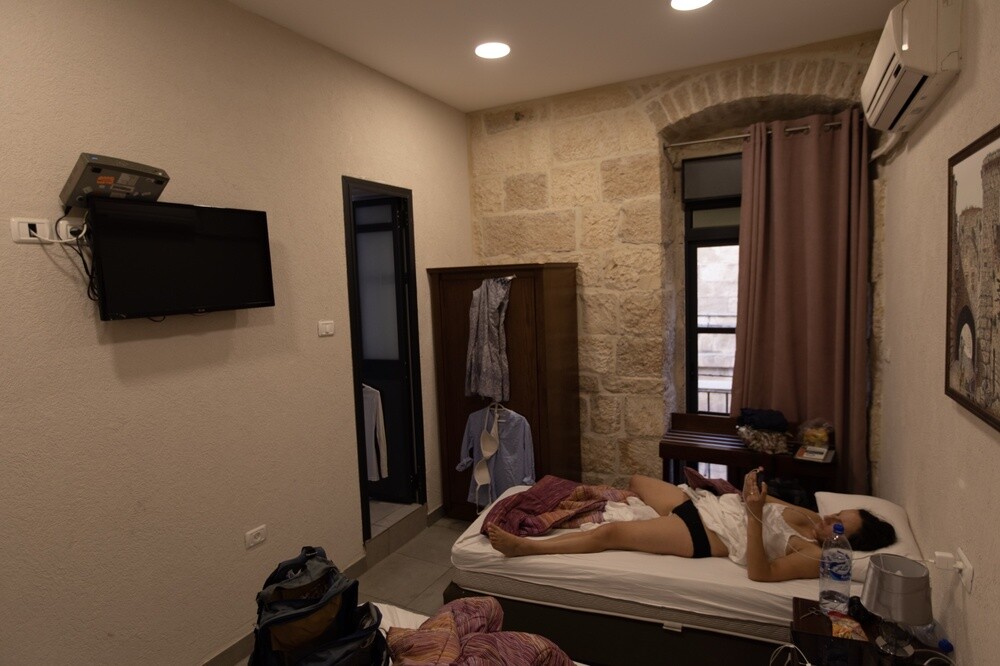
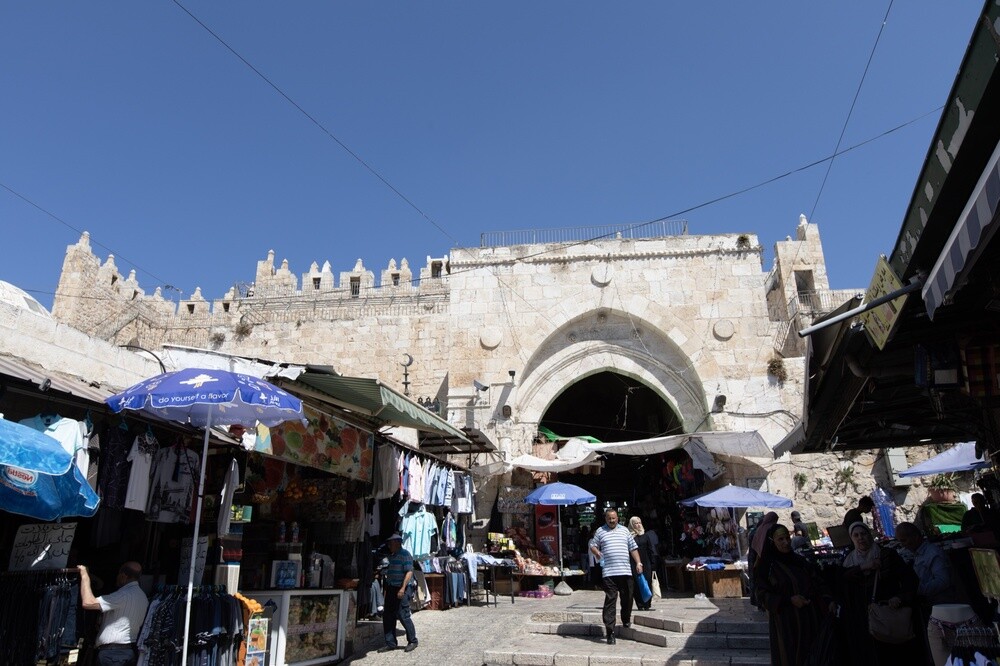
I managed to get the last room in the historic New Imperial hotel right by the Jaffa Gate, with a lobby with a wooden ceiling and chandeliers. We headed straight out into the souk in the narrow roofed lanes. Hanka got stuck in a shop with lamps and ceramics.
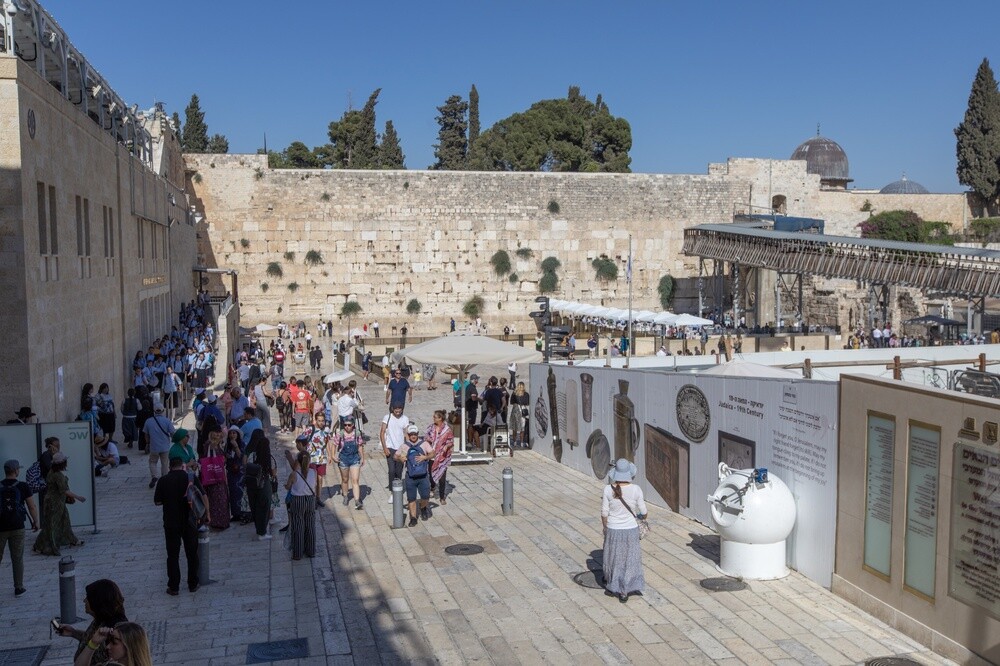
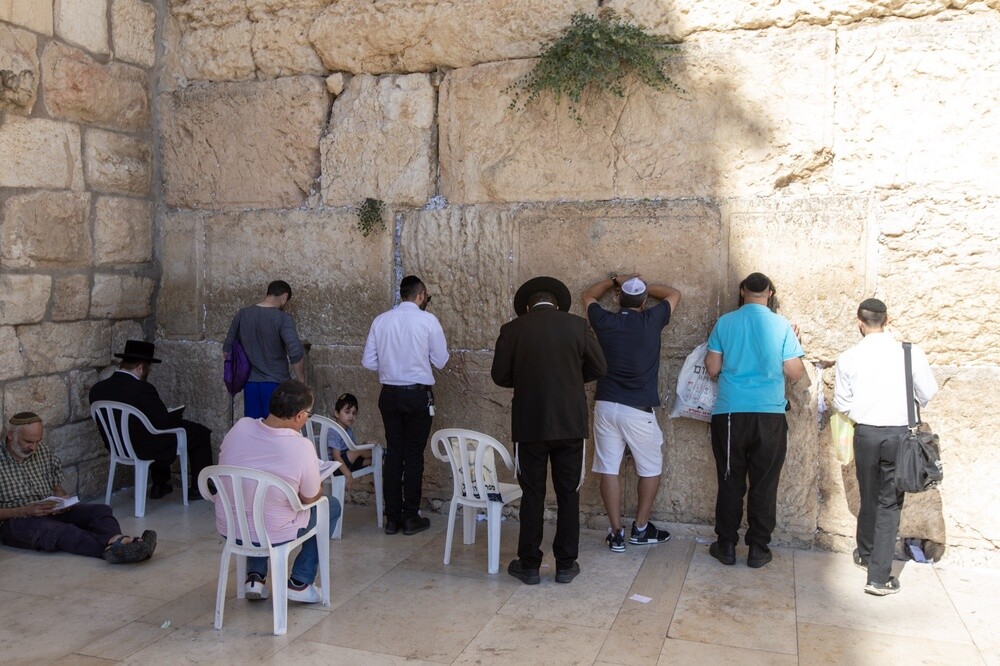
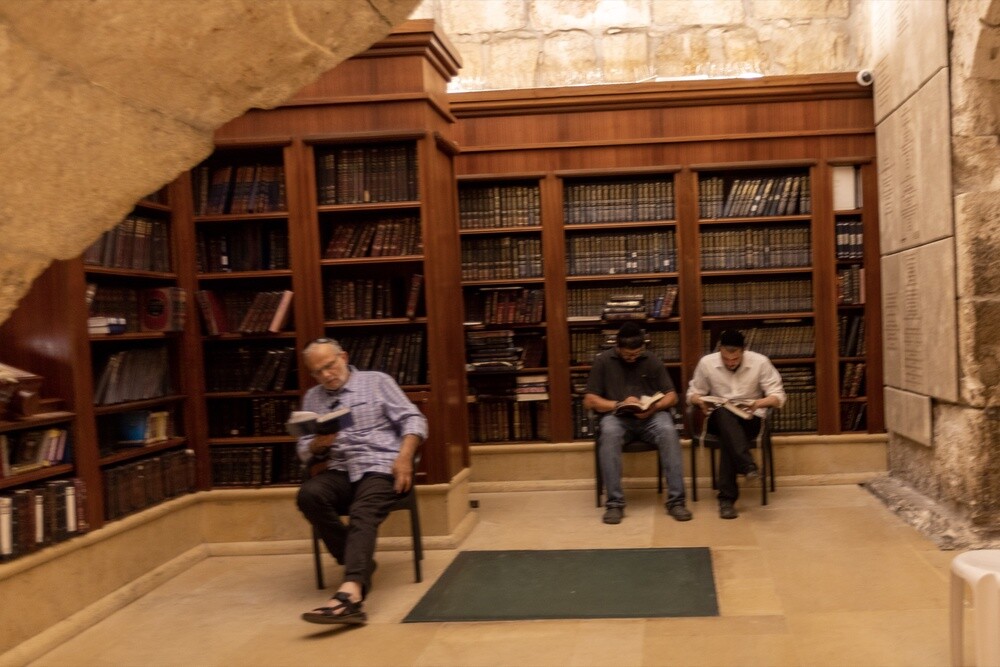
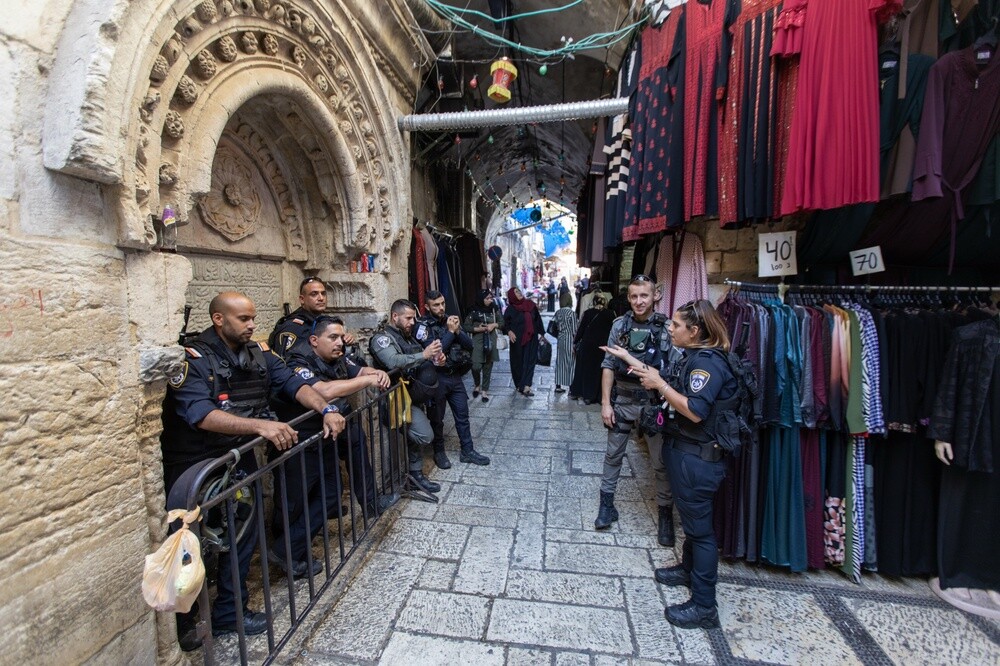
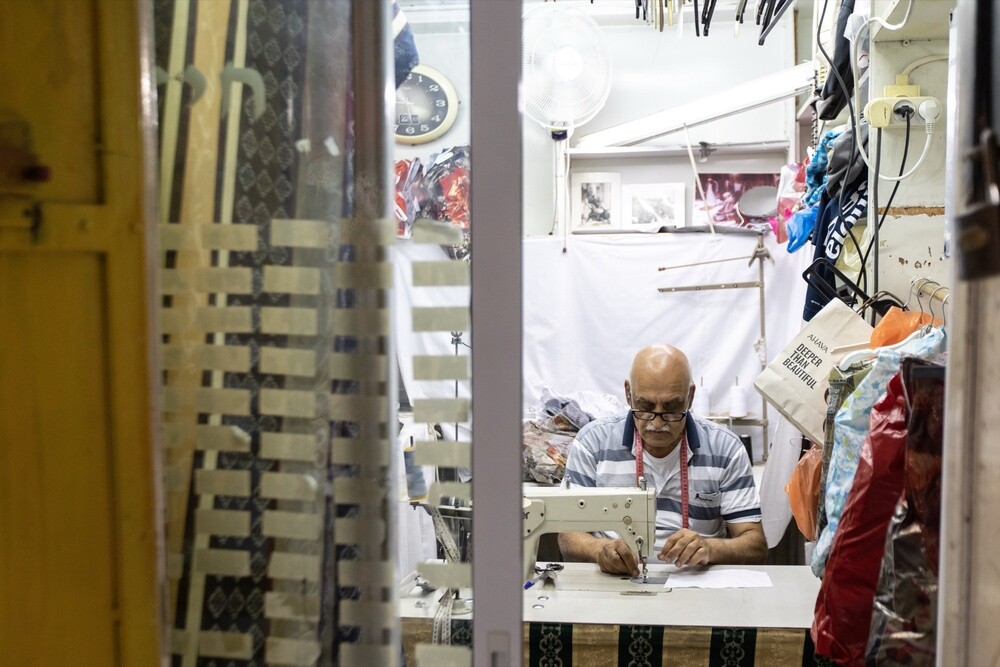
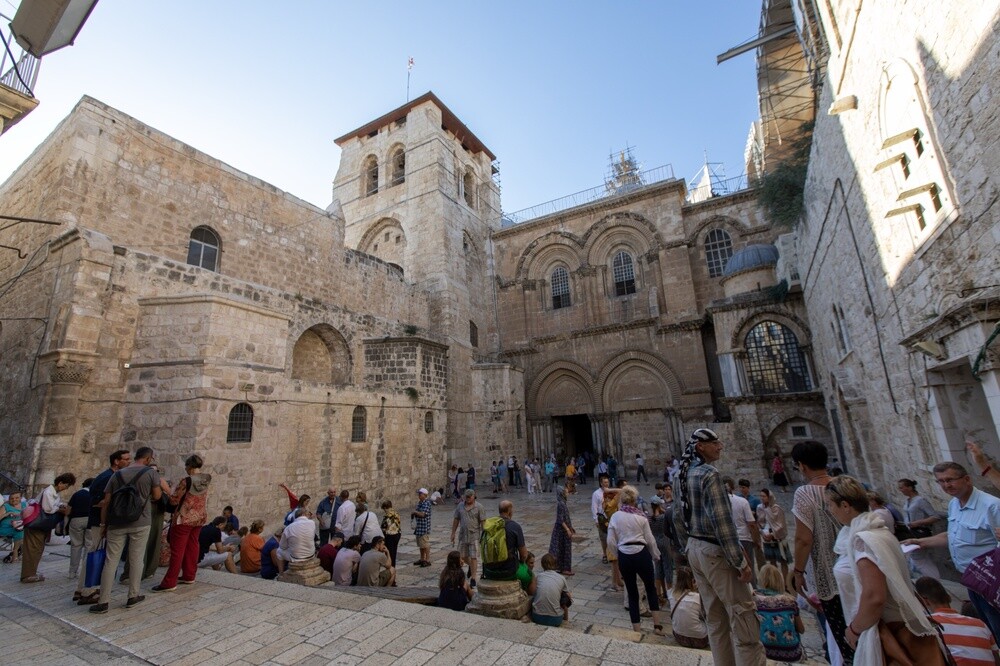
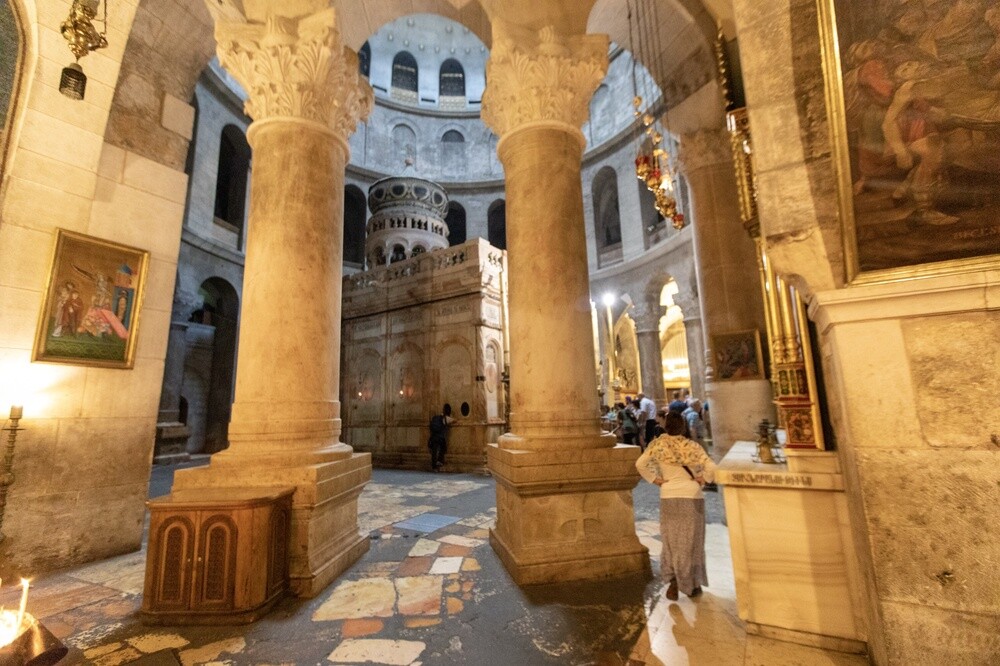
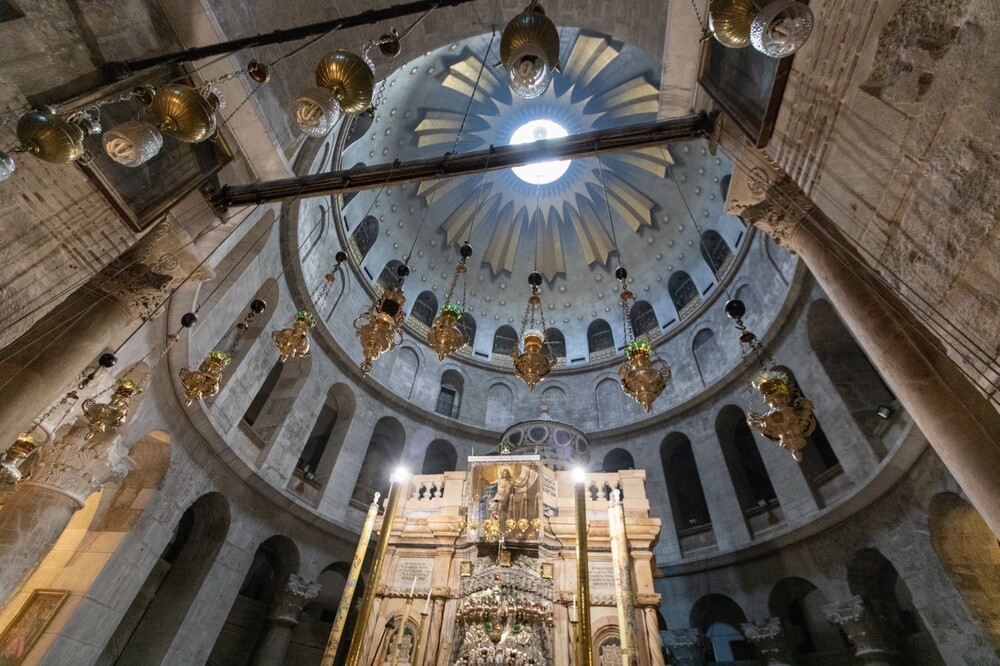
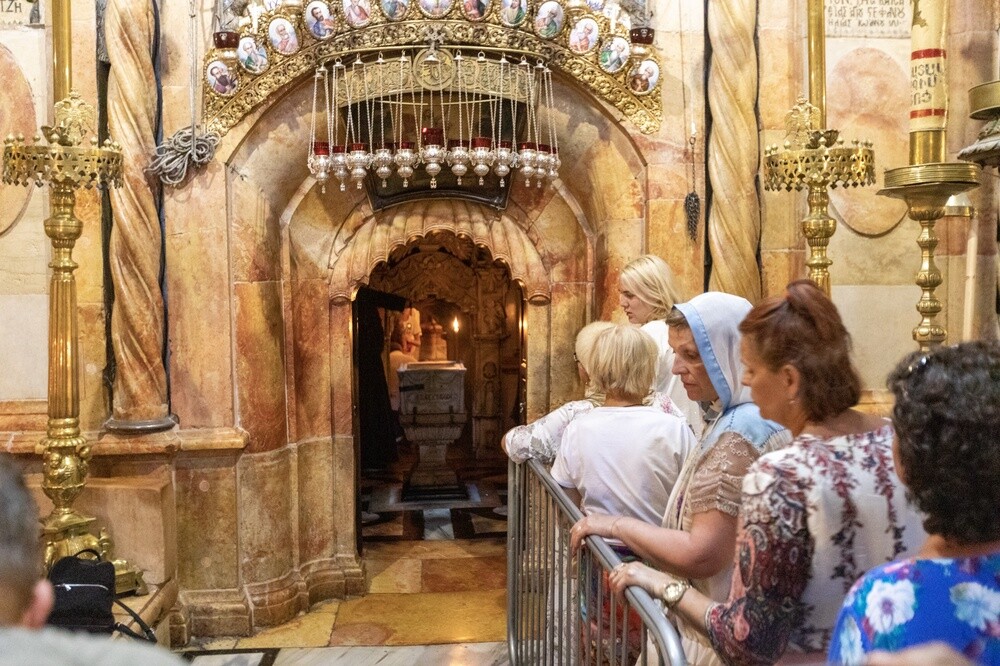
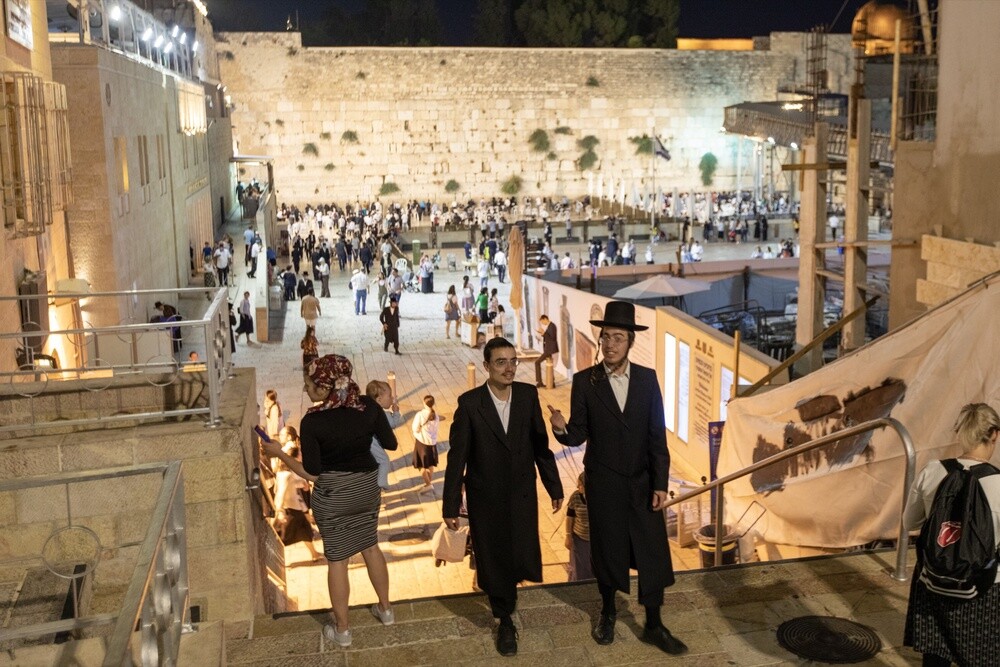
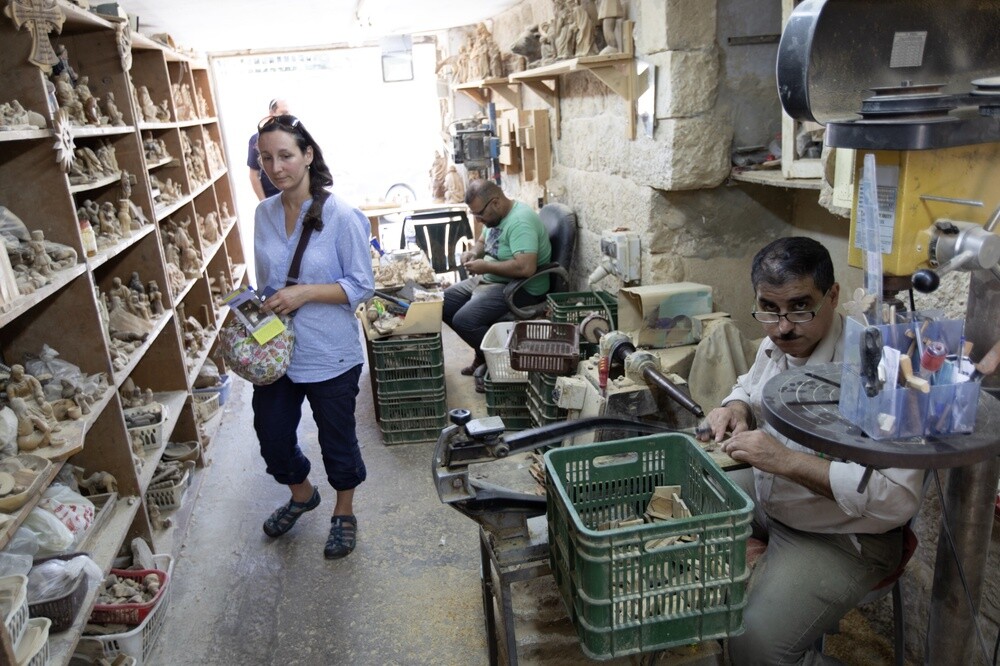
At the Wailing Wall men in black pray up against the wall, next to it in the covered part there's a library and a prayer room. Anyone leaving backs away so as not to turn their back on the wall. Through the lanes, past soldiers with guns at the gate, steps full of stalls and a craftsman in his workshop, we walked along the Via Dolorosa to the Church of the Holy Sepulchre: the stone of anointing, the Aedicula over the tomb and a crazy queue in front of it.
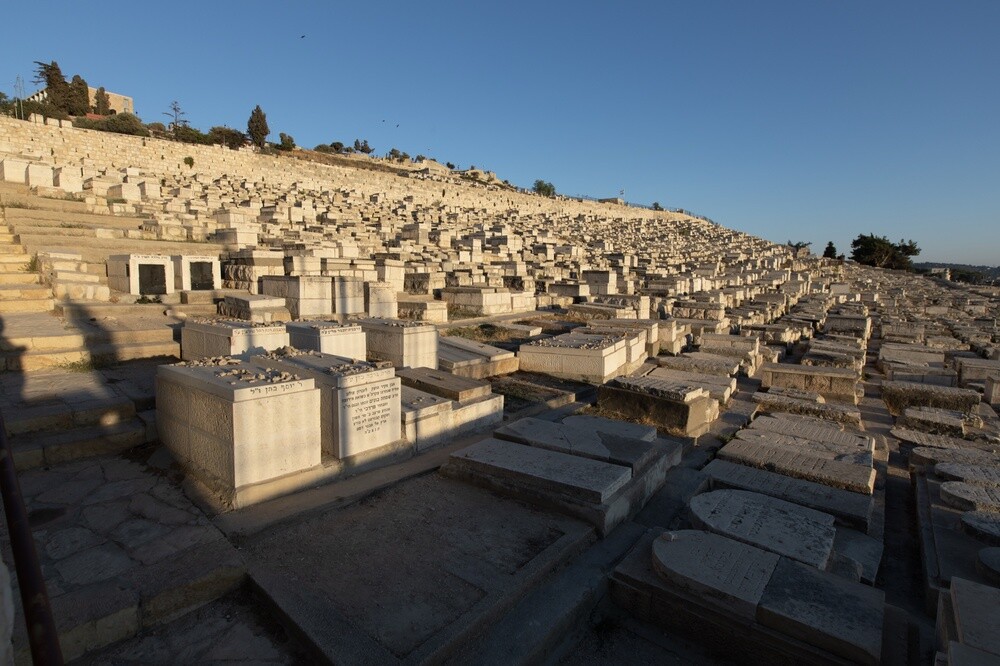
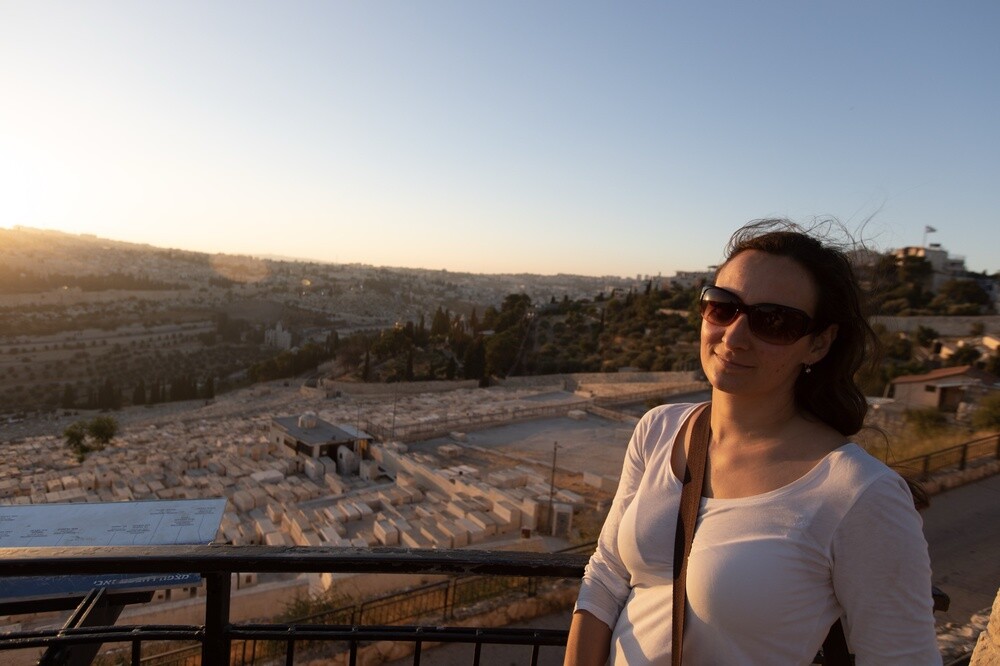
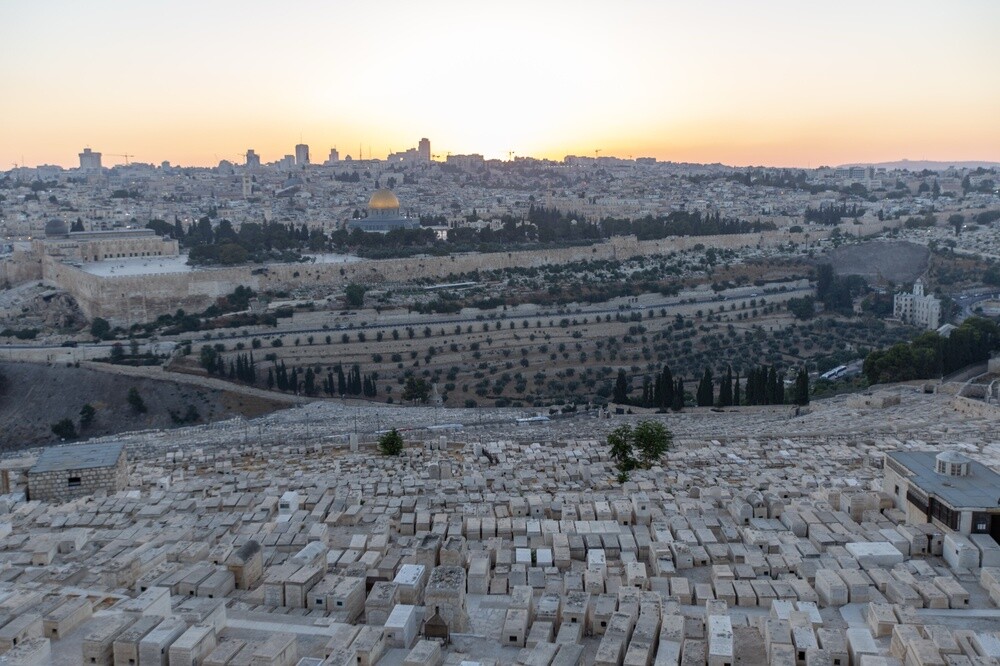
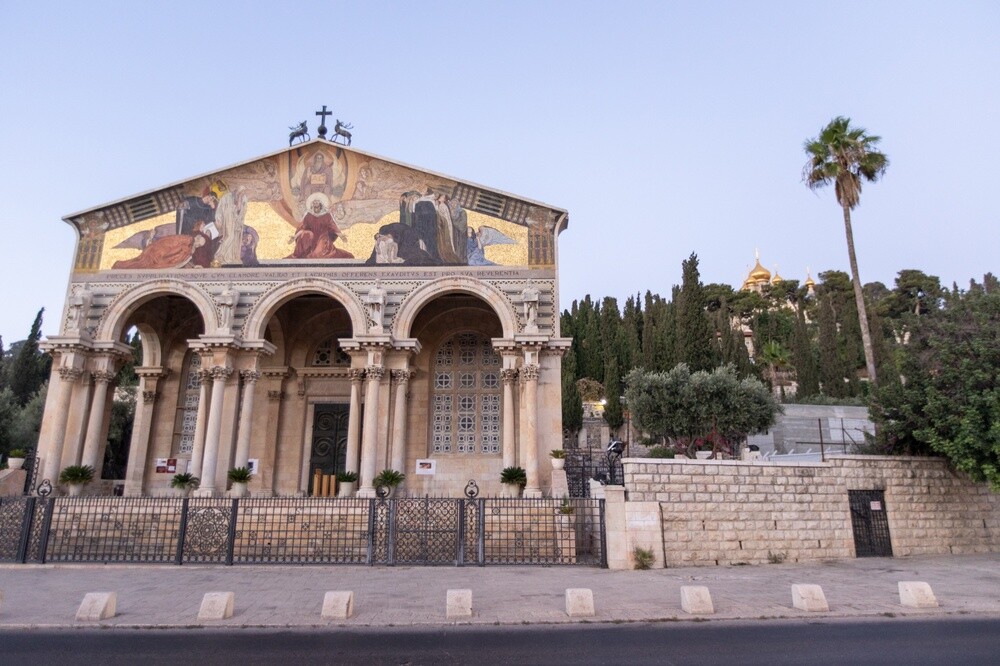
On the advice of a Slovak woman we climbed the Mount of Olives in the evening. The Jewish cemetery, the sunset over the city and the Church of All Nations below us. Back after dark at the Wailing Wall packed with people, falafel from a street stall and a bottle of wine. We wanted to drink it on the hotel roof, but they closed it at ten.
Hanka's diary: Jordan, day three, a trip to Israel. After a dreadful night on a dirt track where about 1200 midges bit me, my legs look like a hobo's. Swollen and one bump next to another. I hardly slept at all. We packed up and set off for the border, which was just a bit further on. We were there at half past eight and unfortunately the bus to Israel had just left. At the border you have to leave the car and cross by bus. We handed in our passports in an air-conditioned waiting room where there was just one lady, and waited for the waiting room to fill up and another bus to be sent out.
Crossing the border was terribly complicated, we had to get out several times and show our passports again. Honza counted that seven people had our passports in their hands. Luckily there was no hitch anywhere, it just all took terribly long. We paid some sort of entry fee and a small bus took us to Jerusalem, which is only about 40 km from the border. The whole thing took about four hours, so we were a bit miffed that it had eaten up so much time. In Israel you pay in shekels, so we also had to sort out changing money.
From the bus we walked about 20 minutes to the hotel. Honza got the last room in the beautiful historic New Imperial hotel right in the centre of Old Jerusalem, directly by one of the gates in the walls. The Old City is surrounded by walls and is divided into four quarters: Jewish, Christian, Muslim and Armenian. The hotel was made of stone and probably terribly old, but inside modern and nice. We caught our breath a bit after that awful night and headed out into the city.
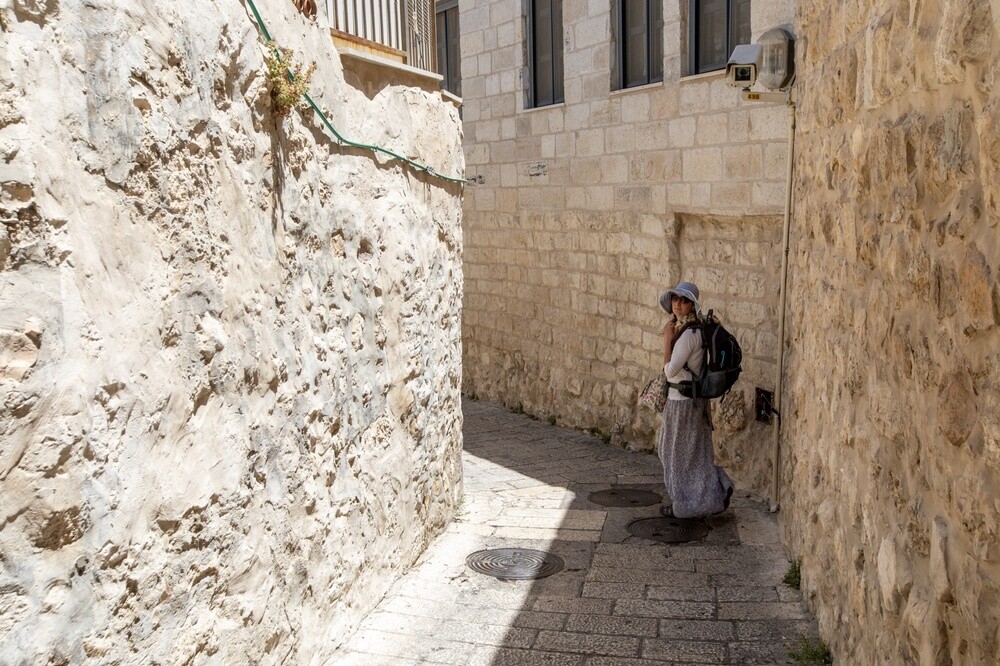
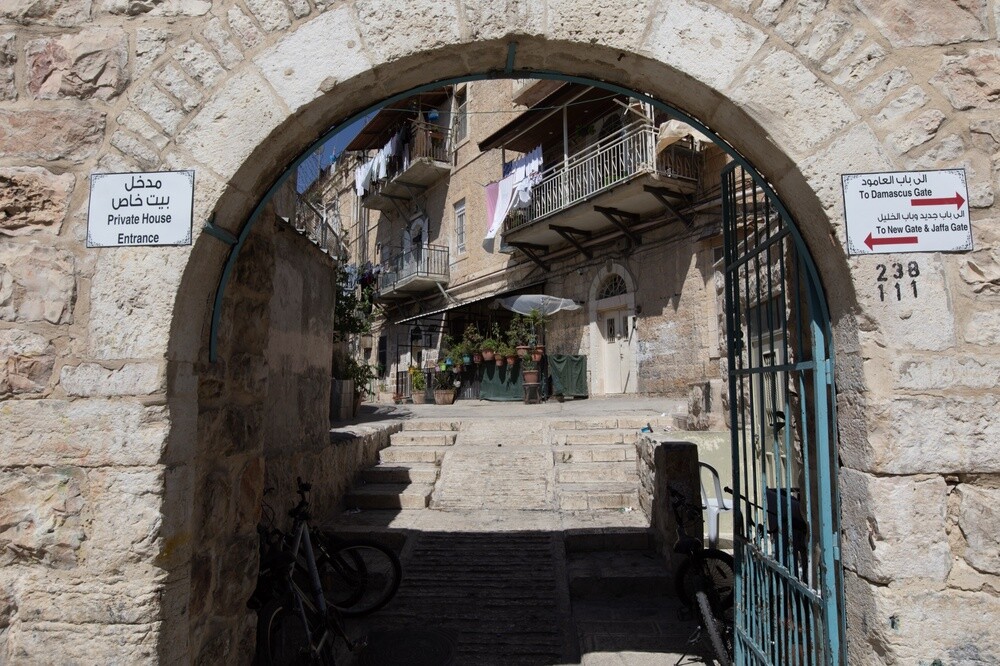
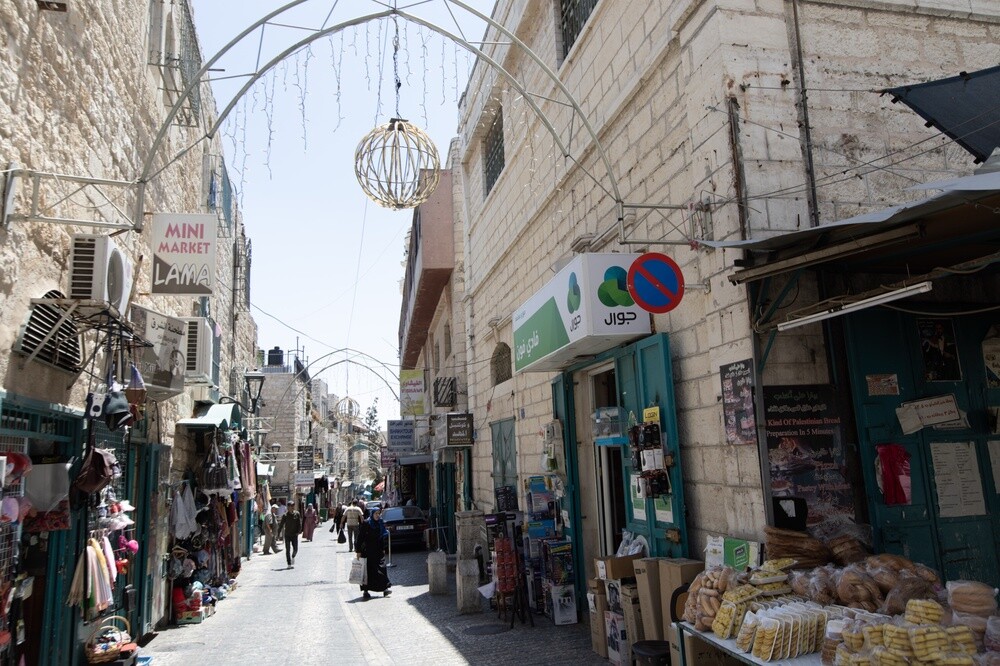
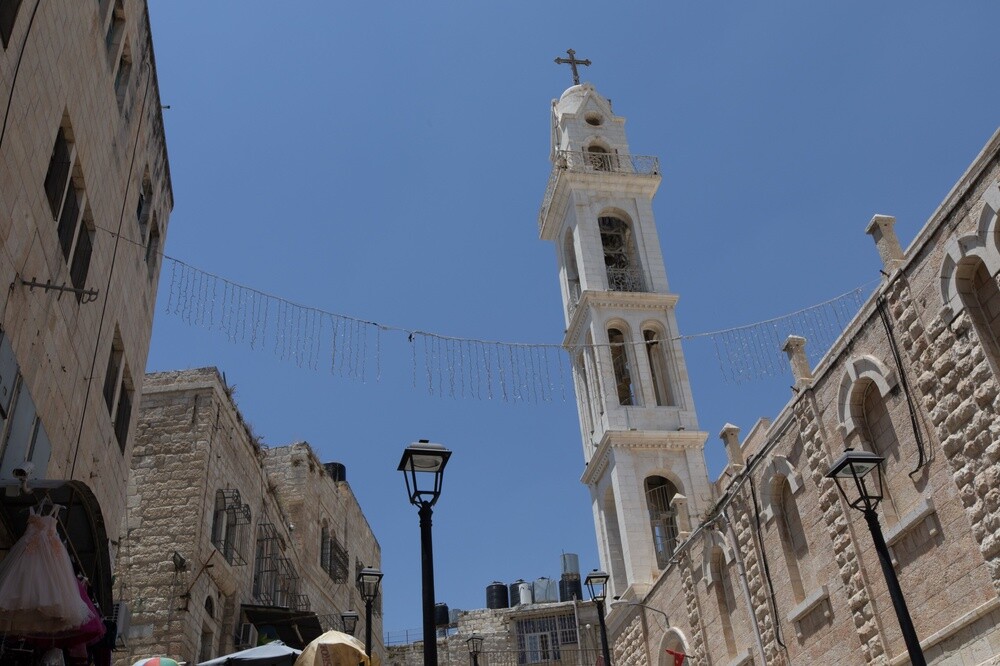
It's amazing how three religions are crammed into one place. At first glance it looks like everyone gets along just fine. It's probably not that simple, as a taxi driver later hinted to us, but in those two days we didn't notice any friction. We walked through the Muslim and Jewish quarters. Old stone houses, tiny narrow lanes a car could barely squeeze through, partly roofed over, so it stayed cool in there. The lanes are lined with hundreds of little shops selling everything from clothes through trinkets and souvenirs to underwear and medicine.
In the street you of course met hordes of tourists, but also loads of veiled Arab women and a great number of Orthodox Jews. The most orthodox ones wear black coats, a black jacket, a waistcoat underneath, a kippah and a black hat on top of it. And with that funny sidelocks and big beards, and they look completely serious even in that getup. It must be pretty unbearable for them in that heat, but they bear it bravely. I wondered whether they even have any civilian jobs, because they looked like they do nothing but pray. The less orthodox Jews wear normal clothes with a kippah. We wondered how it even stays on. It's cunningly placed on the spot where men usually start going bald, so maybe it's got a suction cup inside.
Jewish women, mostly young, with children or husbands, wear a headscarf, but tied quite elegantly over the hair, a bit like a turban, so their forehead, ears and a strip of hair show. Quite pretty. Jewish women are definitely sexier than Arab women, because of that robe of theirs. Otherwise I think Arab women have terribly pretty faces, Jewish women not so much. If I were to sum it up for all the ones I met.
The first place we visited was the Wailing Wall, in English the Western Wall, which isn't as romantic. It's actually just a retaining wall of the former Jewish temple, which fell down ages ago. The Jews were afraid to set foot on the site of the former temple so as not to step where only the high priests were allowed, so out of respect they prayed at the retaining wall and lamented the destroyed temple. At least that's what we read. The prayer area is divided into a women's and a men's part. People write wishes and prayers on little pieces of paper and stuff them between the stones. There were loads of people there, mostly Jews, and when leaving the wall you mustn't turn your back on it, so most people backed away. A little way from the wall there was a fountain with metal cups, and the same cups were also by the washbasins in the toilets. The Jewish women scooped water into a cup and only then poured it over their hands. Another Jewish tradition.
Jerusalem was a bit of a mess, but definitely not like Amman. Then we walked along the Via Dolorosa, which is supposedly the way of the cross, where the poor guy carried the cross, and it ends at the Church of the Holy Sepulchre. At first we thought it was one closed little church and Honza was already photographing it, but the church was another 50 metres further on. There were loads of people there, especially inside in the rotunda, which supposedly contains Jesus's tomb. They built a whole huge church around the rotunda, and there was a crazy queue at the rotunda.
On the recommendation of a Slovak woman we met there, we set off for the Mount of Olives, from where there's supposed to be a nice view of Jerusalem, especially at sunset. The way led along the Via Dolorosa again, already for the third time I think. The Mount of Olives is a hill, so we puffed a bit, but the view was nice. The setting sun took the outlines off the buildings a bit, but once it had set, it was really lovely. Below the Mount of Olives is the biggest Jewish cemetery in the world, I think, really terribly big.
Then, half dead, we trudged back to the hotel. We passed two restaurants with high prices and discovered a street stall selling kebab and falafel. It was very good and cost about a third of what it would in a restaurant. Honza bought wine. Buying alcohol here isn't easy, it's only sold in specialised shops. We wanted to go up on the hotel roof, which you could climb to, but unfortunately they closed it at ten. That was a shame.
I also wanted to say, I don't know if I mentioned it back in Amman: when you want to cross the road, you have to risk your life and rely on the drivers' decency. People throw themselves into the road absolutely anywhere. They lie in wait, and when they think there's a gap, they run regardless of the cars. It looks totally life-threatening, but the drivers are apparently trained for it and let you cross. On a two-lane road you have to hope the other one lets you through too. It's better to join a little group of people, the more of you there are, the better the chance they won't run you over.
Old City of Jerusalem
The fortified core of Jerusalem with its Christian, Muslim, Jewish and Armenian quarters. It has been on the UNESCO list since 1981.
Wailing Wall
The remains of the retaining wall of the Second Temple, the holiest place where Jews may pray.
Church of the Holy Sepulchre
According to tradition it stands on the site of Jesus's crucifixion and tomb. The church is administered by several Christian denominations at once.